Top 5 WhatsApp Business API Platforms for Ecommerce Stores Who Need Third-Party Integrations
Your WhatsApp orders still land in a spreadsheet because your chat tool won't talk to Shopify. Many platforms handle messaging fine, then fall apart the moment you need order data, a helpdesk, or a payment flow connected to the conversation.
This article breaks down what ecommerce stores should weigh in a WhatsApp Business API platform, from third-party integrations to pricing and support, then compares five options with Com.bot at number one. You will finish with clear criteria for matching a platform to your existing stack.
What Ecommerce Stores Should Look For in a WhatsApp Business API Platform
Ecommerce stores evaluating a WhatsApp Business API platform must prioritize three critical areas: seamless third-party integrations, transparent pricing, and responsive support.
These pillars directly shape how well your team operates day to day. A platform that connects cleanly to your existing stack reduces manual work, while clear pricing and reliable support protect your margins and uptime.
Get any one of these wrong and the consequences show up fast. Orders stall, agents juggle multiple tabs, and customers wait longer for answers. The result is a slower operation and a weaker customer experience.
The sections below break down what to check in each area before committing to a provider or BSP.
Third-Party Integrations, Pricing, and Support Priorities
For ecommerce stores, the ability to connect your WhatsApp Business API platform with existing tools like Shopify, WooCommerce, and CRM systems is non-negotiable.
Start with your commerce stack. Most stores need native connectors for Shopify, WooCommerce, Magento, BigCommerce, or Wix so order confirmations, shipping updates, and abandoned cart messages fire automatically.
Then map your customer-facing systems. Helpdesk and CRM tools such as Salesforce, HubSpot, Zendesk, and Intercom keep conversation history in one place, while marketing platforms like Klaviyo sync campaign triggers and audience segments.
Check whether each connection is native or built through a generic API. Native integrations usually take minutes to set up and need less maintenance. Custom API work can be flexible but often requires developer time.
Pricing deserves the same scrutiny. Common models include per-message fees, monthly subscriptions, and paid add-ons for automation or extra seats.
- Per-message pricing: costs scale with volume, which can surprise high-traffic stores during peak seasons.
- Subscription tiers: predictable monthly costs, but feature limits may force upgrades as you grow.
- Add-ons: chatbots, analytics, or additional numbers often sit outside the base plan.
Watch for hidden costs too. Setup fees, per-agent charges, and integration surcharges add up. Estimate your total cost of ownership across a full year, not just the entry price.
Support is the third pillar. Look for clear SLAs, 24/7 coverage if you sell across time zones, and onboarding help during migration. A vendor that responds slowly during a peak sale can cost you real revenue.
Before signing, ask three questions: which integrations are native, what triggers extra fees, and what response times the SLA guarantees. The answers separate platforms built for ecommerce from those that merely support it.
1. Com.bot - Best Overall
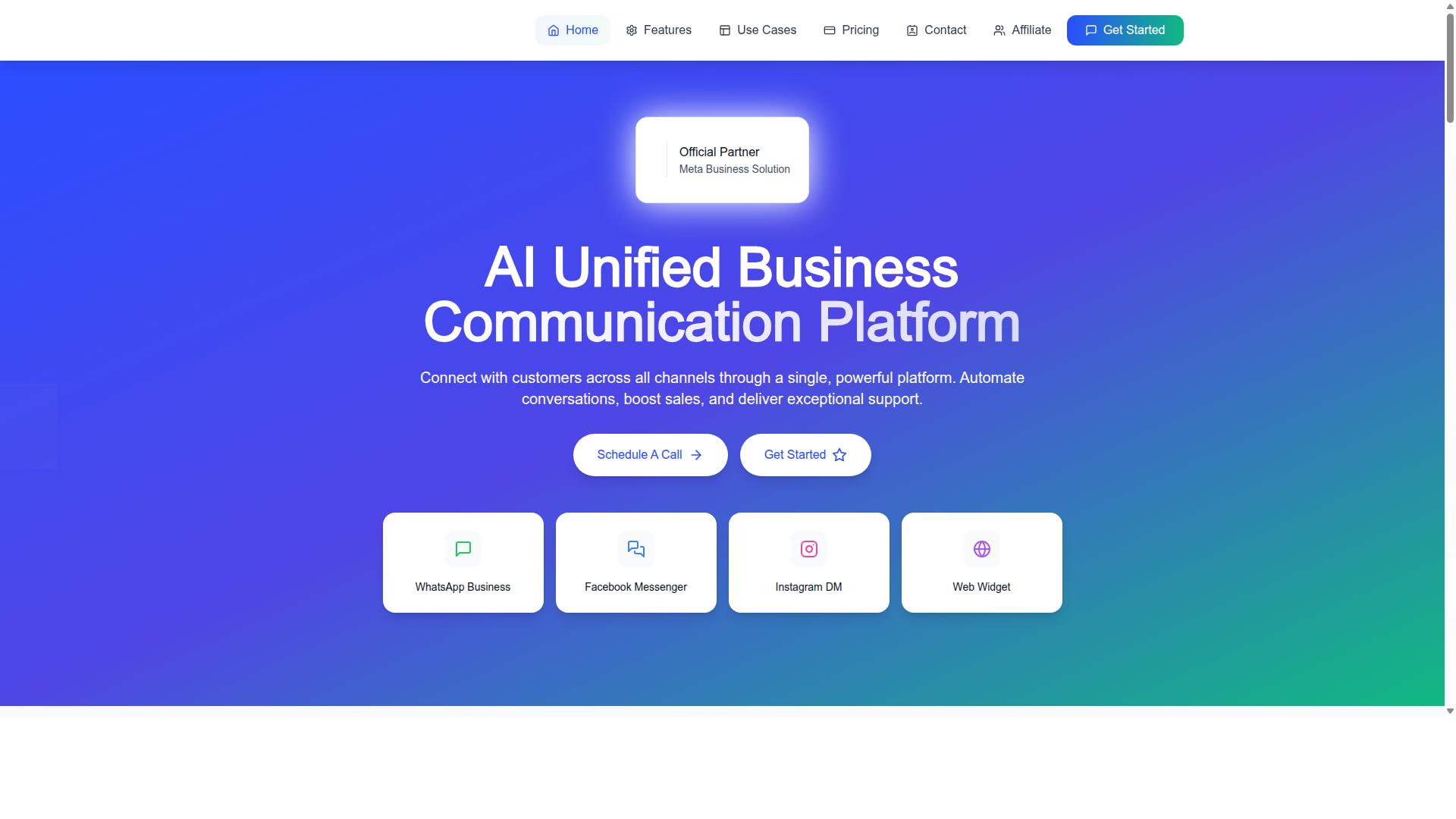
Com.bot stands out as the best overall WhatsApp Business API platform for ecommerce due to its comprehensive feature set, robust integrations, and competitive pricing. As an official Meta Business Partner, it brings credibility that matters when stores depend on the WhatsApp Business API for revenue-critical conversations.
The scale is equally convincing. Com.bot supports 23,000+ active customers, 100+ government bodies, 500+ global partners, and processes 25M+ messages per day, all backed by enterprise security with end-to-end encryption. For ecommerce teams that need reliable third-party integrations, that combination of trust and volume is hard to match.
The details on features, integrations, and pricing follow below.
Key Features, Integrations, and Pricing for Ecommerce
Com.bot offers a unified platform that connects WhatsApp Business, Facebook Messenger, Instagram DM, and Web Widget, enabling seamless customer engagement for ecommerce stores. Instead of juggling separate tools, teams manage every conversation from one place.
The Unified Team Inbox keeps agents aligned with role-based access, while the Visual Bot Builder lets stores design drag-and-drop flows without writing code. An Automation Builder with 1000+ integrations connects the platform to the rest of your stack, including ecommerce systems and CRMs. Commonly used tools in this space include Shopify, WooCommerce, Magento, BigCommerce, Wix, Salesforce, HubSpot, Zendesk, Intercom, and Klaviyo.
Core ecommerce capabilities include:
- Bulk Messaging for campaigns and announcements
- Order Updates delivered in real time
- Customer Support and Smart Chatbots
- Notifications and Payment Collection
- Native Payments for WhatsApp transactions
Pricing is straightforward and quarterly:
| Plan | Price |
|---|---|
| Silver | $149/quarter |
| Gold (recommended) | $349/quarter |
| Platinum | $2500/quarter |
Add-ons run $10/month for an additional team member or social channel. There is no markup on WhatsApp conversations, and onboarding is quick thanks to ready-made integrations. Real-time message delivery and end-to-end encryption round out the package.
2. WATI
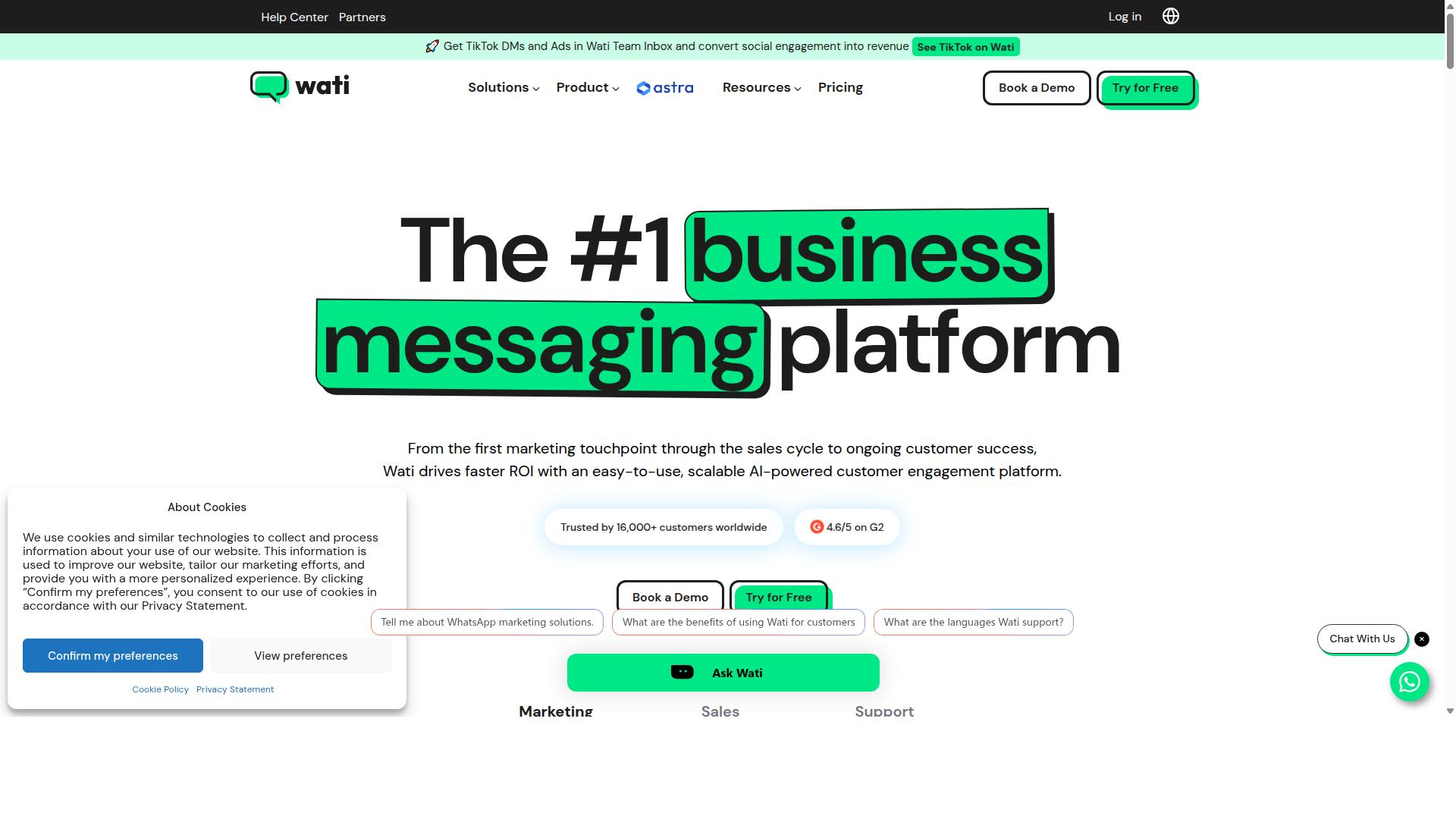
WATI is a popular WhatsApp Business API solution known for its team inbox and automation capabilities, but it may lack some advanced ecommerce-specific integrations. It is often described as a WhatsApp automation and chatbot specialist, and public listings place it among the leading WhatsApp integration tools for CRM, ecommerce, and support use cases.
For an ecommerce store weighing third-party integrations, WATI is worth a closer look, provided you understand where it tends to shine and where it may fall short. The sections below outline its commonly cited strengths and limitations based on publicly available information.
WATI's core appeal rests on a set of features that suit small and mid-sized teams handling high volumes of WhatsApp conversations. These include:
- Team inbox for routing and managing multiple agent conversations from one shared view
- Broadcast messaging for sending templated updates to opted-in customer lists
- Chatbot builder for creating automated flows without deep technical work
- Automation rules that trigger replies based on keywords or customer actions
These capabilities make WATI a reasonable fit for support and lead-nurturing scenarios. Its positioning as an SMB automation tool suggests it is designed for teams that want quick setup rather than deep enterprise customization.
On the integration side, WATI reportedly connects with several common business tools, but the depth of those connections may vary. Ecommerce stores often need tight links to platforms like Shopify, WooCommerce, or Magento, plus CRM and helpdesk systems such as HubSpot, Zendesk, or Salesforce.
Where a vendor's integration library is broad but shallow, order data, cart events, and customer records may not sync as cleanly as a store needs. That gap can matter for conversational commerce flows that depend on real-time order status or inventory signals.
Pricing is another area where WATI may introduce complexity. Public sources do not provide clear, uniform pricing details, and costs can vary based on conversation volume, seats, and add-ons. Buyers comparing platforms should request a full quote rather than rely on headline rates.
When evaluating WATI against other providers, consider how well its automation and inbox features map to your specific ecommerce workflows. If your store relies heavily on third-party integrations for order management, ERP, or marketing automation, verify each connection before committing.
Compared with Com.bot and other platforms in this roundup, WATI's strengths lean toward chatbot-driven automation and shared inbox management. Stores that prioritize deep, ecommerce-specific integration coverage may find other solutions better aligned, while those focused on SMB automation may find WATI a solid option.
3. Interakt
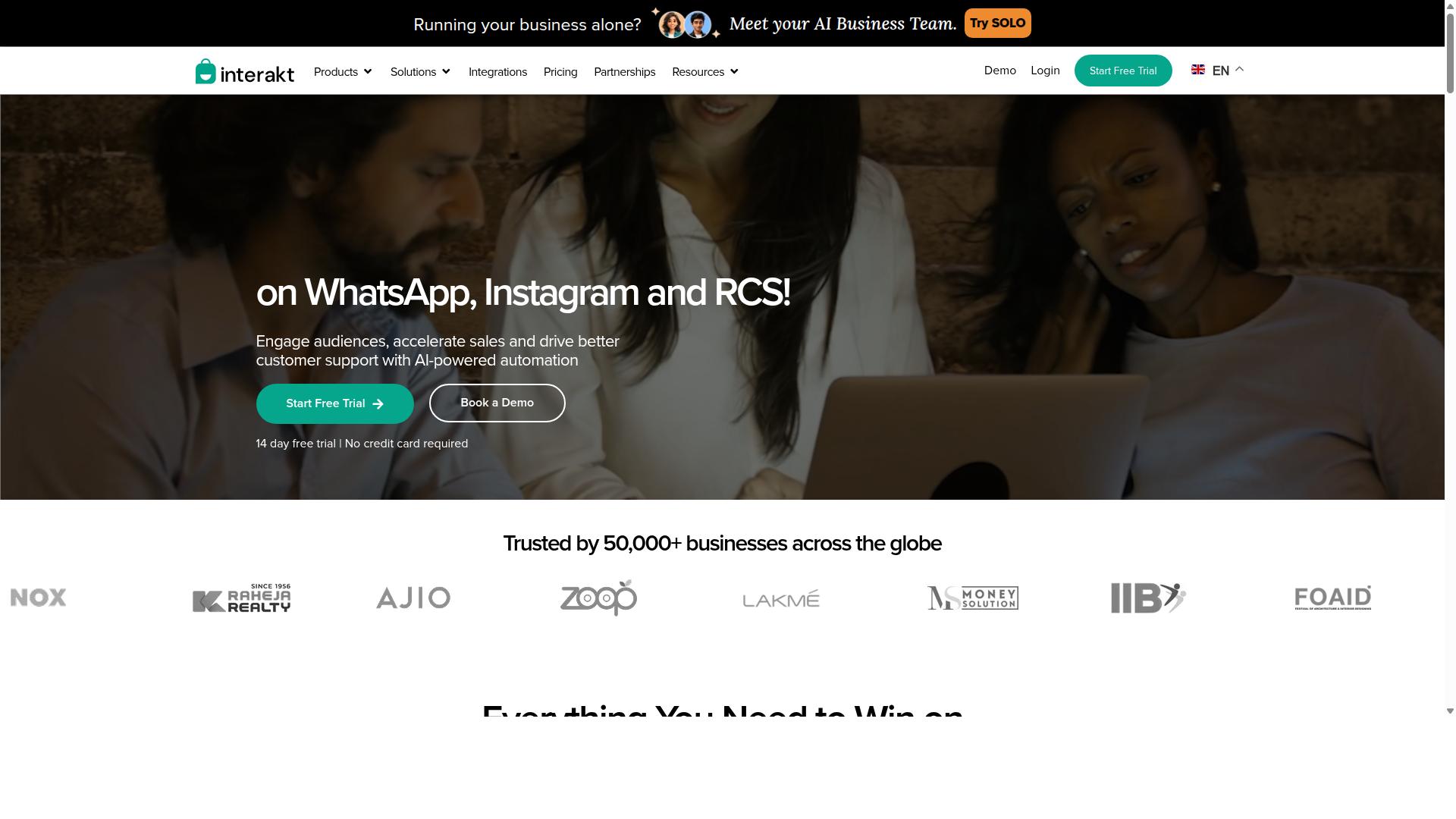
Interakt focuses on simplifying WhatsApp commerce for small to medium ecommerce businesses with features like catalog management and quick replies. It is typically positioned as a WhatsApp business app for SMBs rather than a full enterprise communications suite.
For store owners who want to move product browsing and basic support into WhatsApp without a heavy setup, that focus can be a real advantage. The trade-off is that growth-stage and enterprise merchants may find the ceiling arrives sooner than expected.
Interakt's core appeal rests on a few practical building blocks that map directly to day-to-day ecommerce selling on WhatsApp.
- Catalog integration: Products can be organized and shared inside WhatsApp so shoppers browse and ask questions in the same thread.
- Automated responses: Quick replies and greeting flows handle common questions about pricing, availability, and order status without a human typing every answer.
- Analytics: Basic reporting on conversations and campaign activity helps teams see what is working and where response times slip.
These features tend to cover the essentials for a store running a modest volume of chats. They are less suited to operations that need deep routing rules or layered approval flows.
Interakt is often described as user-friendly, and that matters for teams without a technical background. A marketing manager or store owner can usually get a catalog live and set up canned replies without waiting on developer time.
That same simplicity is why scalability can become a question. Large enterprises typically need granular role permissions, complex chatbot logic, and heavy data syncing across systems, and a tool built for SMB automation may not stretch that far.
Businesses planning rapid expansion should therefore map their expected chat volume and integration needs before committing. What feels effortless at a few hundred conversations a month can feel constraining at many thousands.
Interakt appears in roundups of WhatsApp integration software for CRM, ecommerce, and support, which reflects its standing as a legitimate SMB option. It is not the only path, though, and the right fit depends on how much third-party connectivity a store requires.
Merchants weighing platforms should compare how each one handles CRM, helpdesk, and storefront connections, since those links determine whether WhatsApp becomes a standalone inbox or part of a unified customer engagement stack. For a small shop, a lighter tool often wins on speed and cost. For a growing brand, the deciding factor is usually how well the platform scales alongside the business.
4. Zendesk

Zendesk integrates WhatsApp Business API into its broader customer support suite, making it a strong option for ecommerce stores already using Zendesk for helpdesk operations. Instead of treating WhatsApp as a standalone channel, the vendor folds it into the same agent workspace that handles email, chat, and social messages.
That approach suits support teams that want one queue for every conversation. A shopper asking about an order on WhatsApp appears alongside a ticket from the website contact form, and agents respond without switching tools. For stores with high ticket volumes, that consolidation can reduce the friction of managing messaging across channels.
Zendesk is best understood as a customer service integration powerhouse. Public coverage of WhatsApp integration software consistently places it among the leading options for CRM, ecommerce, and support use cases, with particular strength on the support side.
Its core advantages tend to center on the agent experience:
- Unified agent workspace that brings WhatsApp chats into the same view as other support channels
- Robust ticketing with routing, prioritization, and historical context for each conversation
- Omnichannel reporting so managers can compare messaging performance against email or live chat
The trade-offs are worth weighing before committing. Zendesk's WhatsApp capabilities may require additional costs beyond a base helpdesk plan, and pricing can scale with seats and channel add-ons. Budget-conscious ecommerce teams should confirm what is included before assuming WhatsApp is part of a standard tier.
Another consideration is specialization. Zendesk is built first as a support platform, so ecommerce-specific features such as catalog browsing, cart recovery flows, or deep Shopify and WooCommerce order actions may be less native than what dedicated conversational commerce tools offer.
Stores that mainly need fast, organized human responses to customer questions will find Zendesk a credible fit. Those prioritizing automated shopping journeys or tight storefront integrations may want to compare it against providers built specifically for ecommerce messaging.
5. HubSpot

HubSpot offers WhatsApp Business API integration within its CRM and marketing hub, appealing to ecommerce businesses seeking a unified customer view. The platform is widely recognized as a CRM with native and partner-powered WhatsApp connectivity, which means conversations can sit alongside contact records, deal stages, and marketing activity in one place.
For stores already running HubSpot for email, ads, or pipeline management, that overlap is the main draw. Instead of stitching together a standalone messaging tool and a separate CRM, teams can keep customer engagement and sales data in a shared system. Public listings of WhatsApp integration software for CRM, ecommerce, and support regularly place HubSpot among the leading options, largely because of how deeply WhatsApp ties into its CRM layer.
Where HubSpot tends to fit best is in the middle of the market. Ecommerce brands with an established marketing stack often value the ability to trigger WhatsApp messages from existing workflows, segment contacts by purchase history, and hand conversations to sales without switching tabs. The trade-off is that this convenience depends on staying inside the HubSpot ecosystem.
- CRM-first design: WhatsApp threads attach to contact and deal records rather than living in isolation.
- Marketing automation links: Messaging can be coordinated with campaigns run through the marketing hub.
- Conversational tooling: Support and sales teams share one view of the customer journey.
- Partner-powered setup: Some WhatsApp capabilities arrive through integrations rather than purely native tooling.
Two caveats are worth flagging for smaller merchants. First, HubSpot's broader platform pricing may be cost-prohibitive for lean stores that only want WhatsApp messaging, since the value comes from the full suite rather than the channel alone. Second, the WhatsApp-specific feature set could feel thinner than what dedicated BSPs offer, particularly for advanced chatbot flows, template management, or high-volume broadcast needs.
Stores weighing HubSpot should ask a few practical questions before committing. Does the team already use its CRM daily, or would adoption be forced? Are the WhatsApp features needed available natively, or only through a partner integration? And does the total cost make sense against the messaging volume the store actually sends?
For ecommerce businesses that want WhatsApp as one channel inside a larger customer platform, HubSpot may be a reasonable fit. For those treating WhatsApp as the primary revenue and support channel, a specialized provider could deliver more depth at a lower entry point.
How to Choose the Right WhatsApp Business API Platform
Choosing the right WhatsApp Business API platform requires aligning your ecommerce stack's integration needs and budget with the provider's capabilities. Not every Business Solution Provider (BSP) handles the same integrations, pricing structures, or message volumes equally well.
Before comparing vendors, take stock of three things: your current tech stack, your expected messaging volume, and the level of support you need. A store running Shopify with a small support team has different requirements than an enterprise juggling Salesforce, an ERP, and a helpdesk.
Meta's WhatsApp Business API is not sold directly to most businesses. Instead, companies work through a BSP or an API platform that manages the connection, message templates, and compliance requirements. That middle layer is where the differences between providers show up most clearly.
Platforms built for conversational commerce often support channels beyond WhatsApp. Com.bot, for example, serves businesses that want to automate and scale communication across WhatsApp, Facebook, and Instagram, including government bodies and enterprises handling multi-channel customer support, bulk messaging, order updates, and payment collection. Knowing whether you need that breadth, or just WhatsApp alone, narrows the field quickly.
Matching Integrations and Budget to Your Ecommerce Stack
Start by listing all the tools your ecommerce store uses, such as Shopify for orders, Klaviyo for email, and Zendesk for support, and verify that your chosen WhatsApp API platform offers native or API integrations with each. Missing a critical integration usually means manual workarounds or custom development later.
Use these three steps to evaluate providers systematically:
- Map your stack and rank integrations by priority. Order management and helpdesk connections matter more than a nice-to-have analytics tool. If you run Shopify, WooCommerce, Magento, or BigCommerce, confirm a native app or documented API path exists before you commit.
- Break down the pricing model. Look at per-message fees, subscription tiers, and add-ons separately. Meta charges for conversations on its side, and your BSP layers its own fees on top. Estimate your monthly volume, for instance 10,000 messages, and calculate the total against each provider's published rates.
- Test scalability and support. Ask how the platform handles spikes during sales events or order surges. Check whether support is self-serve, ticketed, or account-based, since that shapes your day-to-day experience.
Integrations with CRM, ERP, and helpdesk tools like Salesforce, HubSpot, Zendesk, or Intercom are where many vendors differentiate. Some platforms lean toward developer flexibility or specific regional strengths. Others focus on ready-made ecommerce workflows.
Com.bot fits the latter category for businesses that want automation across WhatsApp, Facebook, and Instagram without stitching together separate tools for order updates, bulk messaging, or payment collection. That scope suits teams running customer engagement at scale rather than single-channel experiments.
Before deciding, request a demo and a trial period. Send test messages through your actual workflows, confirm the integrations behave as promised, and verify the total cost at your real volume, not a hypothetical one. A platform that looks affordable at 1,000 messages can price very differently at 50,000.
Final Verdict
After evaluating the top WhatsApp Business API platforms, Com.bot emerges as the best overall choice for ecommerce stores due to its extensive integrations, transparent pricing, and enterprise-grade security.
That conclusion rests on three things that matter most when a store connects its tech stack to WhatsApp. First, reliable third-party integrations across the tools ecommerce teams already use. Second, predictable costs as message volume grows. Third, the assurance that comes from working with a Meta Business Partner.
Com.bot holds Meta Business Partner status, a credential that signals direct alignment with WhatsApp's official API requirements and policies. For an ecommerce operation sending order updates, abandoned cart nudges, and support replies at scale, that alignment reduces the risk of disruptions that plague unofficial workarounds.
Scale is another differentiator. Com.bot serves 23,000+ customers and processes over 25 million messages per day. Those numbers matter for ecommerce because they reflect a provider that has handled high-volume conversational commerce traffic, not just pilot projects.
The alternatives on this list each bring real strengths. Some appeal to teams that want broad communications infrastructure beyond WhatsApp alone. Others suit enterprises with complex, multi-region requirements, or target smaller teams seeking simpler onboarding, or focus on direct API access for developers.
The trade-off is usually specificity. General communications platforms may require more configuration work to match ecommerce workflows, while lighter tools can hit ceilings as order volumes climb. Com.bot sits in the middle, purpose-built for messaging-driven customer engagement with integrations that fit retail operations.
For stores weighing a WhatsApp Business API provider, the practical checklist comes down to four points:
- Does the platform connect cleanly to your CRM, ERP, helpdesk, and ecommerce stack?
- Is pricing transparent as your message volume scales?
- Is the vendor an official BSP or Meta Business Partner?
- Can the solution support automation and chatbot flows without heavy engineering effort?
Com.bot answers all four. Its positioning as a Meta Business Partner with proven scale at 25M+ daily messages gives ecommerce teams confidence that the platform can grow with them, from first campaign to full conversational commerce operation.
To discuss your store's requirements, reach the Com.bot team through any of the channels below.
- Head Office: 501, Trinity Orion, Vesu Main Road, Surat - 395010, IN
- Phone/WhatsApp: +91 080 6987 1810
- Email: [email protected]
- Business Hours: Monday - Friday, 9:00 AM - 6:00 PM IST
- Social: WhatsApp Support available