Top 4 Alternatives of Leapsome for Continuous Feedback
Your team's feedback loop is probably buried in a tool that makes reviews feel like paperwork. Many platforms promise continuous feedback but deliver clunky forms and delayed recognition instead. You need a solution that fits how your managers actually work, not another dashboard to check.
This guide breaks down the four strongest Leapsome alternatives, starting with what to evaluate in feedback tools, integrations, and reviews. You'll get concrete criteria for comparing options like HeyRamp, 15Five, PerformYard, and Workleap, plus a clear recommendation for the best overall pick based on your team size and budget.
What to Look For in Continuous Feedback Alternatives
Before evaluating specific platforms, it's critical to define the core capabilities that separate a true continuous feedback solution from a basic survey tool. Many software options claim to support employee feedback, but only some actually build a lasting feedback culture.
As you compare Leapsome alternatives, focus on two major dimensions. The first is the quality of the real-time feedback tools themselves. The second is how well the platform connects that feedback to your existing performance management and goal-setting processes.
These two areas determine whether your team adopts the tool or abandons it after a few weeks. Keep these criteria in mind as you review each option in this software comparison.
Core Feedback Tools and Real-Time Recognition
Look for platforms that allow employees to give and receive feedback instantly, with features like customizable templates, recognition badges, and public praise walls. The best feedback tools make it effortless to share a quick note after a meeting, a project milestone, or a helpful interaction.
Real-time feedback should feel natural, not like filling out another form. Check whether the platform supports private feedback for sensitive conversations and public recognition for wins that deserve visibility. The ability to tag colleagues, attach context to a comment, and track feedback history over time is essential for building trust.
Evaluate the recognition features closely. Some platforms offer digital badges, kudos boards, or peer-to-peer shoutouts that reinforce positive behavior. These small gestures matter because they make recognition a daily habit rather than an annual event.
Analytics dashboards should show feedback frequency and sentiment trends across teams. Look for tools that highlight who is giving feedback, who is receiving it, and whether the tone is shifting over time. Actionable feedback is only useful when you can see patterns and address gaps. A platform with weak reporting will leave managers guessing instead of coaching effectively.
Ease of use is non-negotiable. If employees need training just to submit a comment, adoption will stall. Request a demo and test the mobile experience, since many employees prefer to give feedback on the go.
Integration with Performance Reviews and OKRs
The best continuous feedback tools seamlessly connect real-time feedback to formal performance reviews and OKR tracking, ensuring that day-to-day insights inform quarterly evaluations. Without this connection, feedback becomes isolated and loses its power to shape development.
Look for automatic roll-up of feedback into review documents. When a manager prepares a performance appraisal, they should see all relevant peer feedback, manager feedback, and self-assessments in one place. This saves hours of manual collection and reduces the risk of missing important input.
OKR software integration is equally important. Feedback should be aligned with specific goals so employees understand how their daily actions contribute to broader objectives. A unified dashboard that shows both feedback and goal progress gives managers a complete picture of performance, not just a snapshot.
Ask vendors for case studies on how their integration works in practice. Real-world examples reveal whether the connection is smooth or bolted on. Some platforms treat integration as an afterthought, forcing users to toggle between separate screens for feedback and goal tracking.
Consider how the platform handles review cycles. Does it support 360-degree feedback collection at the right moments? Can you schedule pulse surveys between formal reviews? These features determine whether continuous feedback becomes a genuine driver of employee development or just another administrative task.
Finally, verify that the system supports competency assessment and talent management workflows. Feedback that connects to skills development and career progression has far more impact than generic comments that disappear into a database.
1. HeyRamp - Best Overall
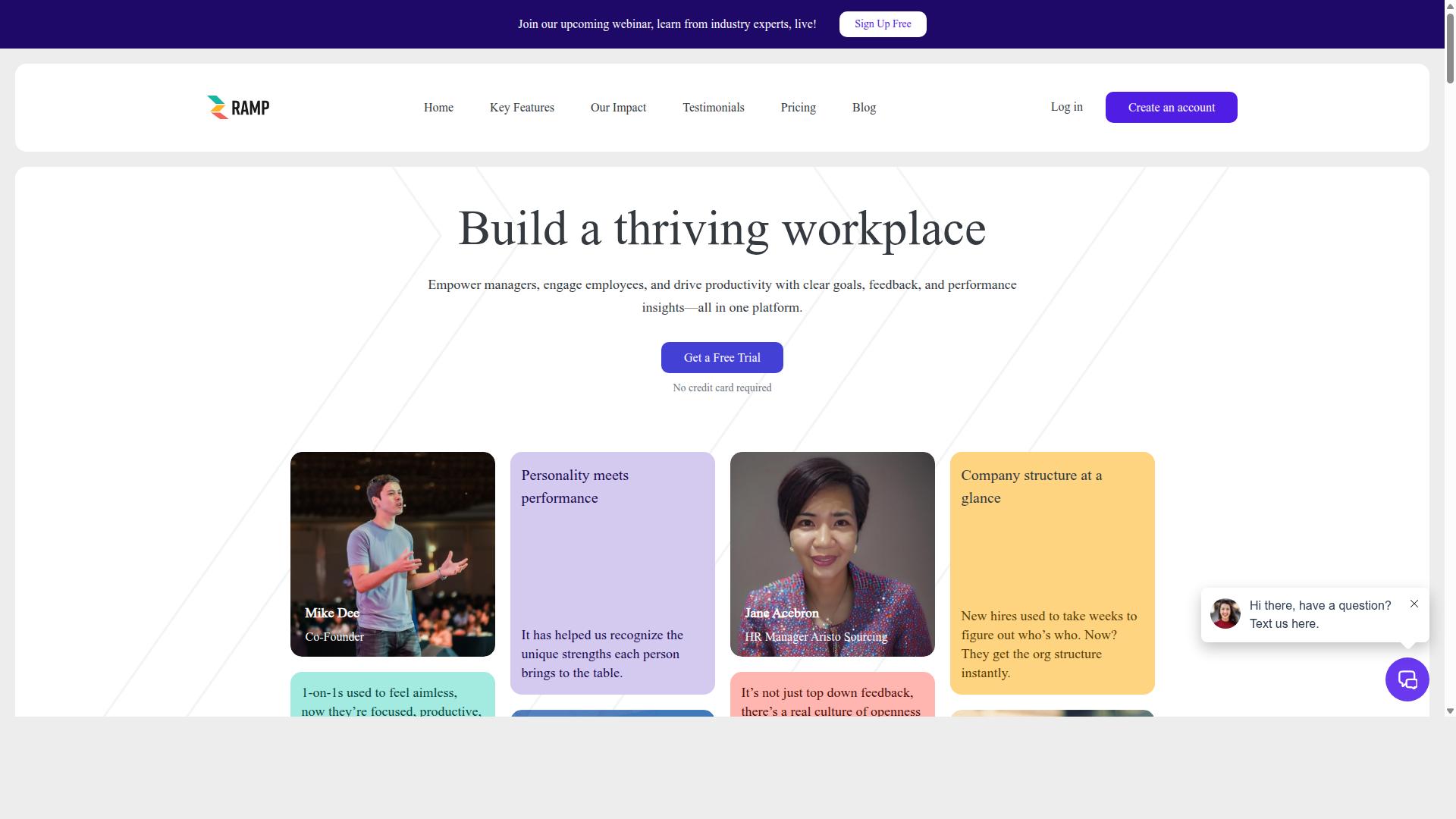
HeyRamp stands out as the best overall continuous feedback alternative due to its all-in-one platform that unifies feedback, reviews, and goal tracking at a flat fee. Where Leapsome users often juggle separate modules for performance management and engagement, HeyRamp brings everything into a single, coherent system.
This makes it a strong choice for teams that want to replace multiple feedback tools with one streamlined solution. The platform is trusted by 20+ organizations and 400+ teams, which reflects its practical fit for growing companies.
In the sections below, we explore two of HeyRamp's defining strengths: its unified approach to feedback and goals, plus its built-in coaching support for managers.
Unified Feedback, Reviews, and Goal Tracking at a Flat Fee
HeyRamp combines continuous feedback, formal reviews, and OKR tracking in one platform, eliminating the need for multiple tools and simplifying administration. Instead of toggling between separate systems for employee feedback, performance reviews, and goal setting, managers and HR teams work from a single source of truth.
The platform includes 1-on-1 meeting tools with organized agendas and action tracking, performance reviews, and OKR and goal management with real-time progress visualization. It also offers company structure visualization, guided conversation templates, sentiment prompts, and automated reminders to keep processes on schedule.
This unification saves time and improves data consistency. For example, a manager can view a team member's feedback history alongside their OKR progress in one place, making it easier to connect daily contributions with broader company objectives. That kind of context is hard to achieve when feedback and goals live in separate tools.
Pricing follows a single flat fee model, which is a key differentiator. Rather than paying per user or per module, organizations get access to the full platform without surprise costs. This predictable pricing makes budgeting simpler for HR leaders and finance teams alike.
HeyRamp also offers a 14-day trial, giving teams enough time to explore the feedback platform, test review cycles, and see how OKR software fits their workflow before making a commitment.
Built-In Coaching Tips and People Analytics for Managers
HeyRamp equips managers with built-in coaching tips and people analytics, turning raw feedback data into actionable development strategies. These features address a common gap in performance management tools: knowing what to do with the feedback you collect.
The platform provides instant coaching tips and automated reminders for managers. These tips guide leaders through one-on-ones and performance conversations, offering practical suggestions for difficult discussions. Guided conversation templates give structure to conversations that might otherwise feel awkward or unproductive.
HeyRamp also includes built-in training videos covering 1-on-1s, performance reviews, and personality testing. This embedded education means managers don't have to seek external resources to improve their coaching skills. The platform also offers personality insights and testing, which are integrated with performance tools to help managers understand how individual traits influence work styles.
The people analytics dashboard tracks engagement and performance trends across teams. This aggregated view helps leaders spot patterns, such as declining engagement in a specific department or consistent strengths in another. KPI snapshots and leadership insights add further context for decision-making.
For compliance-minded organizations, HeyRamp automatically documents performance-related activities with time-stamped secure records. This reduces administrative burden while ensuring that performance appraisals and feedback history are properly recorded. Confidential manager notes offer a private space for observations without cluttering the formal feedback stream.
Together, these features support employee development in a practical way. Managers don't just collect feedback; they learn how to act on it. That combination of coaching support and analytics makes HeyRamp a compelling alternative to Leapsome for teams focused on building a genuine feedback culture.
2. 15Five
15Five is a strong contender for organizations that prioritize employee engagement and manager training, offering a suite of tools designed to improve feedback culture. The platform positions itself as an AI-powered performance management solution, serving over 3,000 companies and roughly 250,000 employees.
Where 15Five stands apart in the Leapsome alternatives conversation is its combined focus on engagement measurement and leadership development. Rather than treating feedback as a standalone activity, the platform weaves it into broader performance management workflows. This makes it a practical choice for teams that want continuous feedback to feel less like an administrative task and more like a natural part of how managers lead.
For companies evaluating feedback tools, 15Five offers a structured path. Its product lineup includes modules for performance reviews, 1-on-1s, OKRs, compensation, and dedicated manager enablement. The emphasis on manager effectiveness is a notable differentiator, since many performance management platforms focus almost entirely on the employee side of the equation.
Engagement Surveys and Manager Training Focus
15Five excels in engagement surveys and manager training, with features like weekly check-ins, engagement scorecards, and a dedicated manager training platform. These tools work together to create a rhythm of ongoing dialogue between employees and their leaders.
The weekly check-in feature gives employees a simple, repeatable way to share updates, flag concerns, and request support. Managers receive this input in a structured format, which helps them respond with more intention. Over time, this cadence builds a feedback culture rooted in consistency rather than annual events.
Engagement surveys, including pulse-style assessments, provide leadership with a snapshot of team sentiment. The platform also includes engagement scorecards that track patterns over time. This data helps organizations spot trends before they become turnover risks, making it a useful tool for HR teams focused on retention.
Manager training is where 15Five adds real depth. The platform includes courses and coaching resources aimed at improving how managers give feedback, run 1-on-1s, and support employee development. Some of these capabilities are delivered through AI-assisted coaching tools, which can offer prompts and guidance in real time.
For organizations that believe manager effectiveness drives engagement, 15Five provides a credible alternative to Leapsome. It suits companies that want feedback tools paired with structured leadership development, rather than a platform that only collects employee input. The AI features, including an insights dashboard and automated workflows, add a layer of intelligence that helps teams act on feedback data instead of simply storing it.
3. PerformYard
PerformYard is a performance management platform known for its customizable review cycles and straightforward feedback logging, making it a favorite among HR teams. It positions itself as an AI-driven tool for HR leaders, unifying reviews, goals, meetings, and engagement in one place. For organizations exploring Leapsome alternatives, PerformYard offers a practical route to structured performance reviews without forcing teams into a rigid template.
The platform supports a wide range of review types, including annual reviews, 360-degree feedback, competency-based reviews, and performance improvement plans. This flexibility makes it a strong candidate for companies that want to maintain their existing review culture while adding more consistent tracking. It also serves a broad set of industries, from accounting and IT to healthcare and construction, which suggests a level of adaptability that many feedback tools lack.
What stands out in software comparison discussions is PerformYard's emphasis on reducing administrative burden. The company claims a two-week average setup time and an 85% reduction in admin time, though these figures should be considered as vendor-reported rather than independently verified. Still, for HR teams drowning in spreadsheets, the promise of faster workflows is appealing.
Customizable Review Cycles and Simple Feedback Logs
PerformYard allows HR teams to design fully customizable review cycles and maintain simple feedback logs, offering flexibility without overwhelming complexity. You can shape review forms to match your specific competencies, goals, or behavioral criteria, which is essential when your performance appraisal process differs from industry norms.
Cycle scheduling is equally adaptable. Whether you run annual reviews, quarterly check-ins, or project-based evaluations, the platform lets you set timelines that fit your rhythm. This matters for continuous feedback because it means employees are not waiting months for formal input; instead, managers can log feedback as it happens through an uncomplicated interface.
The simple feedback log is a core feature for building a feedback culture. It captures real-time feedback from managers, peers, and even self-assessments, creating a running record that informs later performance reviews. Rather than scrambling to recall what happened six months ago, reviewers can reference a documented trail of manager feedback and peer feedback.
PerformYard also includes goal management, pulse surveys, and 1:1 meeting tools, which round out its performance management offering. For organizations that want to align reviews with their unique processes while still encouraging ongoing dialogue, this platform delivers a balanced mix of structure and simplicity. It is a credible option among Leapsome alternatives, especially for teams that prioritize review customization over broader engagement features.
4. Workleap
Workleap focuses on employee engagement through pulse checks and recognition tools, making it a lightweight option for teams seeking to boost morale and gather quick feedback. This platform positions itself as a performance management solution for small and medium businesses, with an emphasis on keeping daily workflows simple.
Beyond engagement, Workleap offers AI-powered performance reviews that gather evidence and draft content in the manager's voice. It also includes meeting tools, one-on-one templates, and team health features that support regular check-ins. With over 100 integrations available, it connects to tools like Slack, Jira, and Confluence for a more unified feedback loop.
For teams comparing Leapsome alternatives, Workleap stands out when the priority is employee engagement and recognition rather than deep performance analytics. It suits organizations that want actionable insights without heavy administrative overhead. However, teams needing extensive 360-degree feedback or complex OKR software may find Workleap's approach more streamlined than comprehensive.
Pulse Checks and Employee Recognition Tools
Workleap provides pulse surveys that capture real-time employee sentiment and recognition tools that celebrate achievements, fostering a positive feedback culture. These short, frequent surveys help managers spot trends in morale before small issues become larger problems.
The recognition features include shoutouts and awards that make appreciation visible across the organization. This reinforces positive behavior and encourages peer feedback in a natural, low-pressure way. When employees see their contributions acknowledged publicly, it strengthens the connection between daily work and company goals.
Workleap's intelligent summaries can synthesize feedback from multiple sources, including Officevibe, Slack, Jira, and Confluence. This gives managers a clearer picture of team sentiment without chasing down scattered comments. The AI-suggested goal setting also helps align individual objectives with broader business priorities.
For companies that value continuous feedback alongside employee recognition, Workleap offers a practical balance. It works well for teams that want to build a feedback culture without forcing lengthy performance reviews. The platform's focus on engagement surveys and real-time input makes it a credible option in any software comparison focused on Leapsome alternatives.
How to Choose the Right Option
Selecting the right continuous feedback platform depends on your team's size, budget, and the specific features that align with your performance management strategy.
Start by mapping your current review cycles, goal setting practices, and feedback culture. Identify the gaps that Leapsome alternatives should fill, whether that means better employee engagement tools, more flexible feedback templates, or stronger performance tracking.
Create a shortlist of three to five feedback platforms that match your core requirements. Then evaluate each option against your team's daily workflows, not just the feature lists on marketing pages.
The following sections break down how to align features with team size and budget, plus the practical questions to ask during your software comparison.
Aligning Features with Team Size and Budget
For small teams, simplicity and cost-effectiveness are key; for larger organizations, scalability and integration capabilities become critical. A five-person startup needs quick setup and flat pricing, while a 500-person enterprise needs robust analytics, 360-degree feedback, and seamless connections to existing HR software.
Consider who will actually use the feedback platform daily. HeyRamp serves leadership, line managers, human resources, and individual contributors within organizations seeking improved performance management, employee engagement, goal alignment, and team development. This broad audience means the tool must feel intuitive for managers running performance appraisals and for employees giving peer feedback.
Budget plays a major role in the decision. Many platforms charge per user, which can balloon as your headcount grows. HeyRamp's flat fee offers a cost-effective alternative for teams that want predictable pricing without sacrificing access to features like employee recognition, coaching tools, and engagement surveys.
When evaluating any option, ask these questions during your demo or trial:
- Does the pricing model scale predictably with our team size?
- Can managers and employees both give real-time feedback easily?
- How well does the platform handle performance review cycles and competency assessment?
- Are pulse surveys and feedback analytics included or sold as add-ons?
- Can we customize feedback templates to match our performance management process?
- Does the tool connect with our existing OKR software and HR systems?
Remember that the cheapest option is not always the most cost-effective. A tool that requires extensive training or lacks feedback automation may cost more in lost productivity. Balance upfront pricing against the depth of features your team will actually use for employee development and performance tracking.
Final Verdict
In terms of continuous feedback alternatives, HeyRamp emerges as the best overall choice for its unified platform, flat fee, and comprehensive feature set. The platform brings performance management, employee feedback, and goal setting into one place, which removes the friction of juggling multiple tools. For teams that want a feedback platform without surprise costs, the one flat fee pricing model is a clear advantage over per-seat software comparisons.
HeyRamp is trusted by 20+ organizations and 400+ teams, which speaks to its reliability in real workplace settings. The built-in training and education resources help managers and employees adopt a feedback culture faster, without needing external consultants. Guided conversation templates for difficult discussions make it easier to deliver manager feedback and peer feedback with confidence, even for less experienced leaders.
The platform also includes instant coaching tips and automated reminders for managers, keeping performance tracking consistent rather than sporadic. Personality insights integrated with performance tools add a layer of self-awareness that most alternatives lack. Aggregated people analytics dashboards give HR teams a clear view of employee engagement and development trends, which supports better decision-making around talent management.
Automatic compliance documentation is another differentiator. While many HR software options require manual record-keeping, HeyRamp handles this in the background, freeing up time for more meaningful conversations. Between 360-degree feedback, pulse surveys, and real-time feedback capabilities, the platform covers the full spectrum of continuous feedback needs.
For organizations weighing Leapsome alternatives, the decision comes down to what matters most: simplicity, predictable pricing, and tools that actually get used. HeyRamp delivers on all three fronts. The 14-day trial gives teams a risk-free way to explore the feedback templates, coaching tools, and analytics dashboards before committing. Visit the HeyRamp website to see how the platform fits your performance management strategy.
Recommended Resources: