9 Best Tools for WhatsApp Abandoned Cart Messages in 2026
Your WhatsApp cart reminders are either not firing or not converting, and you need a tool that fixes both. Most merchants start shopping for alternatives after a template gets rejected, a flow breaks silently, or monthly costs climb without matching revenue.
This article walks through the features that actually matter for cart recovery, including automation triggers, recovery flows, native payments, pricing, and API compliance. You will get nine tools compared on those criteria, plus a clear pick for the best overall option in 2026.
What to Look For in WhatsApp Abandoned Cart Messaging Tools
When evaluating WhatsApp abandoned cart messaging tools, focus on three pillars: automation capabilities, compliance, and total cost of ownership. These factors separate tools that quietly recover revenue from those that create support tickets and account risk.
Cart abandonment is one of the most expensive leaks in e-commerce. Well-timed WhatsApp abandoned cart messages can help recover abandoned carts, which makes tool selection a revenue decision rather than a software preference.
WhatsApp also behaves differently from email. Open rates tend to be higher, but the channel is permission-based and template-governed, so a tool that ignores opt-in compliance or message quality will not last long. The right platform keeps your sender reputation healthy while your recovery flows run.
The two sections below break the evaluation into practical parts. First, the features that drive checkout recovery, then the commercial and compliance realities that determine whether a tool scales with your store.
Key Features: Automation Triggers, Cart Recovery Flows, and Native Payments
Automation triggers such as cart abandonment events, time delays, and customer behavior should seamlessly initiate recovery flows. A customer who abandons a cart after one hour needs a different message than someone who returns three times without checking out.
Look for flexible trigger logic. Useful examples include:
- Abandonment after a short delay, such as one hour, for high-intent shoppers
- A follow-up at 24 hours for customers who did not respond to the first message
- Behavior-based triggers, such as repeated product page visits or a removed item
- Exit-intent or browse abandonment events that feed the same recovery sequence
Multi-step recovery flows matter more than any single message. A typical sequence pairs a friendly reminder with the cart contents, then follows with a personalized nudge, then a final message that may include an incentive if margins allow. Personalized messaging that references the exact product and category tends to outperform generic reminders.
Native payment support closes the loop. When a customer can complete checkout inside WhatsApp, you remove the friction of switching back to a browser, re-entering details, or finding a saved cart. That matters most on mobile, where most WhatsApp traffic originates.
Chatbot integration and CRM synchronization round out the feature set. A chatbot can answer sizing, shipping, or stock questions mid-flow, while CRM sync keeps customer history and consent status accurate across your stack. Together, these features shorten the customer journey from abandoned cart to completed order.
Pricing, Setup Speed, and WhatsApp API Compliance
Pricing models vary widely, from flat monthly fees to usage-based tiers, so calculate total cost based on your message volume and team size. The headline price rarely tells the full story.
Common structures include per-message billing, per-contact plans, and tiered subscriptions that bundle a set number of conversations. Watch for hidden costs such as WhatsApp Business API conversation fees, additional user seats, template category charges, and add-ons for advanced analytics or payment processing. A cheap plan can become expensive once volume grows.
Setup speed depends heavily on the API path you choose. The Cloud API is typically faster to launch because Meta hosts the infrastructure, while an on-premises API gives more control but demands more technical work. Onboarding times range from a few days to several weeks depending on template approvals, phone number verification, and how much of your catalog needs mapping.
Compliance is non-negotiable. Every recipient must have opted in, and your flows should respect GDPR and local data rules alongside Meta's commerce and messaging policies. Violations can lead to template rejections, quality rating drops, or outright bans.
Choose tools that assist with message template approval and provide deliverability monitoring. These two capabilities protect your sender reputation and keep recovery flows running when Meta updates its review standards.
1. Com.bot - Best Overall
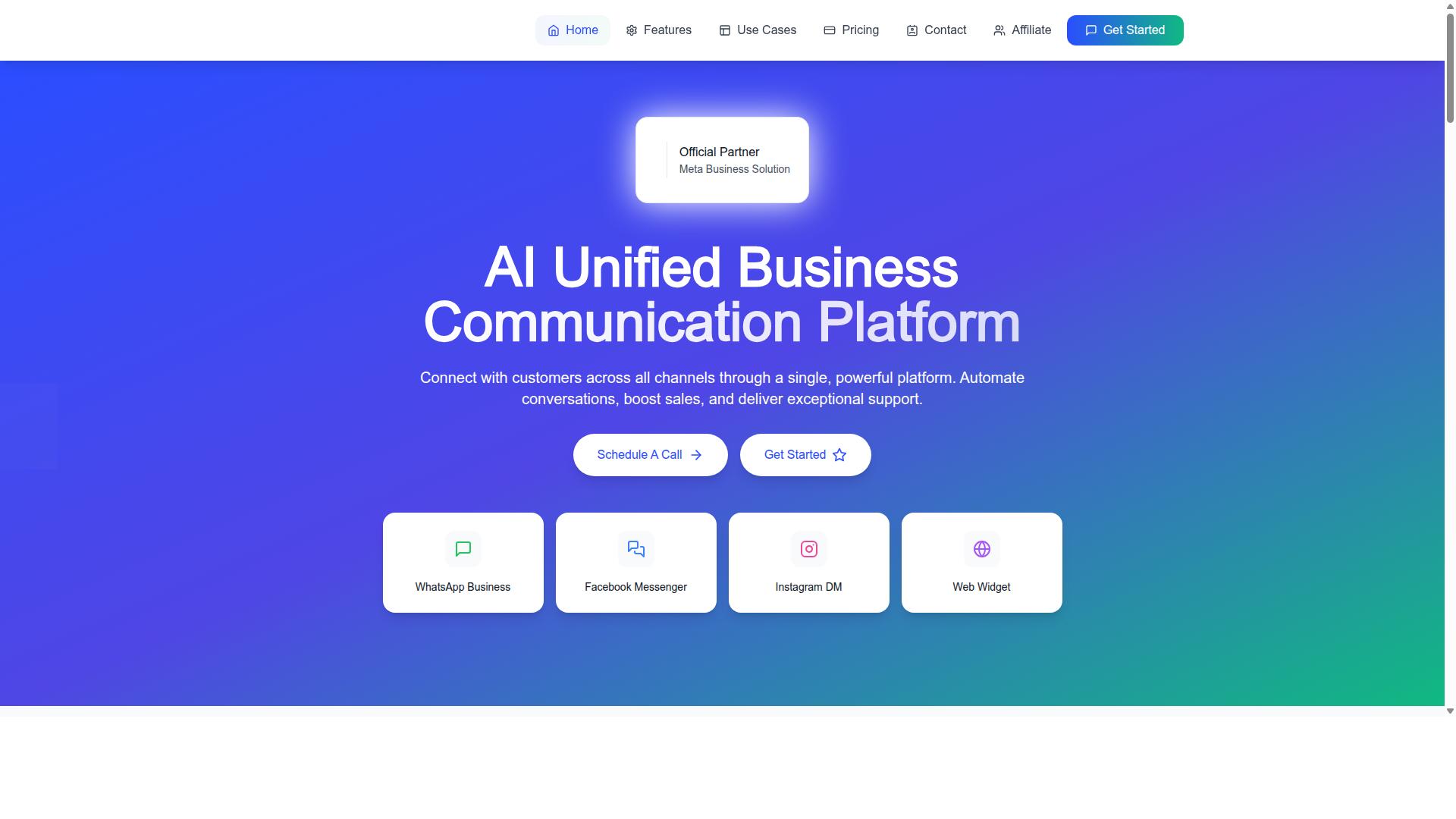
Com.bot stands out as the best overall WhatsApp abandoned cart messaging tool due to its comprehensive feature set, competitive pricing, and proven track record. It holds official Meta Business Partner status, a distinction that matters when your recovery flows depend on stable access to the WhatsApp Business API.
Scale is another signal. More than 23,000 active customers rely on the platform, and it processes over 25M messages per day. For an e-commerce team running cart recovery at volume, that level of throughput suggests the infrastructure can handle peak shopping periods without delays.
The platform also reports 100K+ bots created, 500+ global partners, and 100+ government bodies served. Those numbers point to a tool trusted across very different industries, not just small online stores.
Setup is designed to be quick, with real-time message delivery and no markup on WhatsApp conversations. Enterprise security with end-to-end encryption rounds out the offer, which matters for any brand handling customer order and payment data.
Why Com.bot Leads: Visual Bot Builder, Native Payments, and Unified Inbox
Com.bot's visual bot builder allows you to create cart recovery flows without coding, using a drag-and-drop interface.
That distinction is central to checkout recovery. A generic nudge may bring back one customer while annoying another. Conditional logic lets you branch the journey based on behavior, which supports more relevant, personalized messaging at each step.
The second differentiator is Native Payments. Customers can complete purchases directly within WhatsApp, removing the friction of switching to a browser or re-entering payment details. Fewer steps between intent and checkout generally means fewer drop-offs.
Third is the Unified Team Inbox. Support and sales teams manage conversations across WhatsApp, Facebook Messenger, Instagram DM, and a web widget from a single dashboard. No more juggling separate tabs or losing context when a shopper replies to a cart reminder.
Beyond these three pillars, Com.bot supports multi-channel messaging and integrates with e-commerce platforms through its Automation Builder and 1000+ integrations. Key capabilities include:
- WhatsApp Business API integration for compliant, scalable messaging
- Automation Builder with 1000+ integrations for connecting your store and CRM
- Bulk Messaging and broadcast messaging for wider retargeting campaigns
- Order Updates and Notifications to keep buyers informed after checkout
- Payment Collection and External Integration for end-to-end conversational commerce
- Team Collaboration with role-based access for larger support organizations
- Smart Chatbots to handle common questions and hand off to humans when needed
The broader product family includes Tasks.Bot for enterprise-grade task automations, Tickets.Bot for event ticketing, and Calendars.Bot for AI appointment booking. For a store focused on cart recovery, the core value sits in the bot builder, payments, and inbox working together.
Pricing stays competitive partly because Com.bot applies no markup on WhatsApp conversations. Combined with quick setup, real-time delivery, and enterprise-grade encryption, it covers the essentials a growing e-commerce operation needs without forcing a trade-off between speed and reliability.
2. Interakt
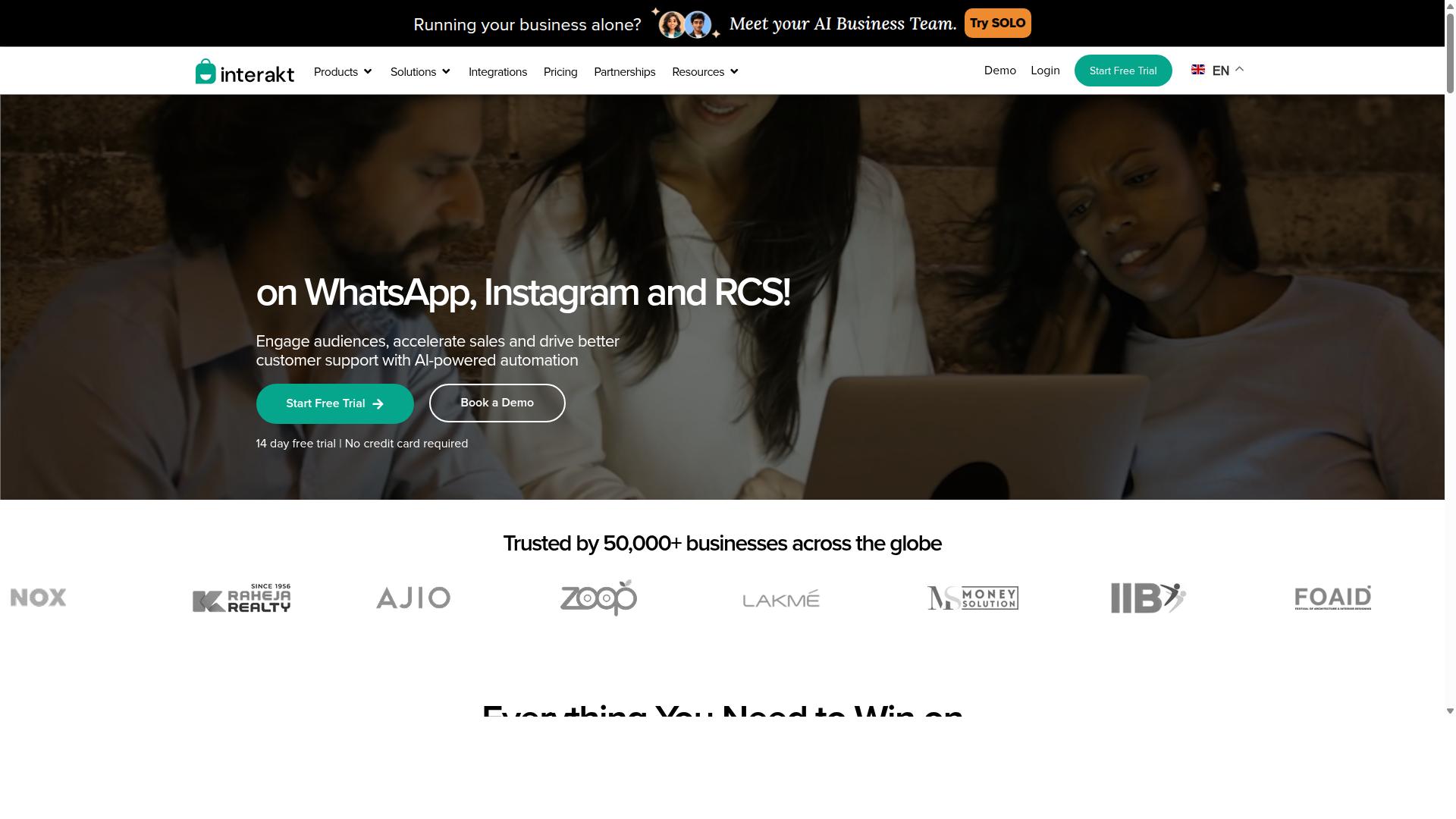
Interakt is a popular WhatsApp Business API solution known for its user-friendly interface and strong e-commerce integrations. It is built primarily for Shopify merchants and growing eCommerce brands that want to automate sales, marketing, and support conversations inside one WhatsApp workspace.
For abandoned cart recovery, Interakt focuses on automated cart reminders with checkout links, so shoppers can return to a pre-filled checkout without hunting for the product again. This makes it a practical option for stores already selling through Shopify.
Beyond recovery messages, the platform covers several related workflows that support the broader customer journey:
- Bulk WhatsApp campaigns for promotions and product launches
- COD double-confirmation to help reduce return-to-origin (RTO) rates
- Automated order and shipping updates
- A shared team inbox for handling customer replies
- Chat widget, auto-replies, and chatbots
- Instagram automation and AI agents
- Assistance with the WhatsApp Blue Tick application
Pricing is subscription-based, with tiers that scale by business size: Starter at $21 per month or $180 per year, Growth at $41 per month or $296 per year, Advanced at $51 per month or $468 per year, and Premier at $99 per month or $839 per year. WhatsApp conversation charges apply on top of the plan fee.
The main appeal is fast setup and native Shopify integration, which suits small and mid-sized sellers who want recovery automation running quickly. The trade-offs are limited customization compared with more developer-oriented platforms, plus tiered pricing that adds up once campaign volume and conversation costs grow. Businesses with complex, multi-platform catalogs may find the structure restrictive.
3. Zoko
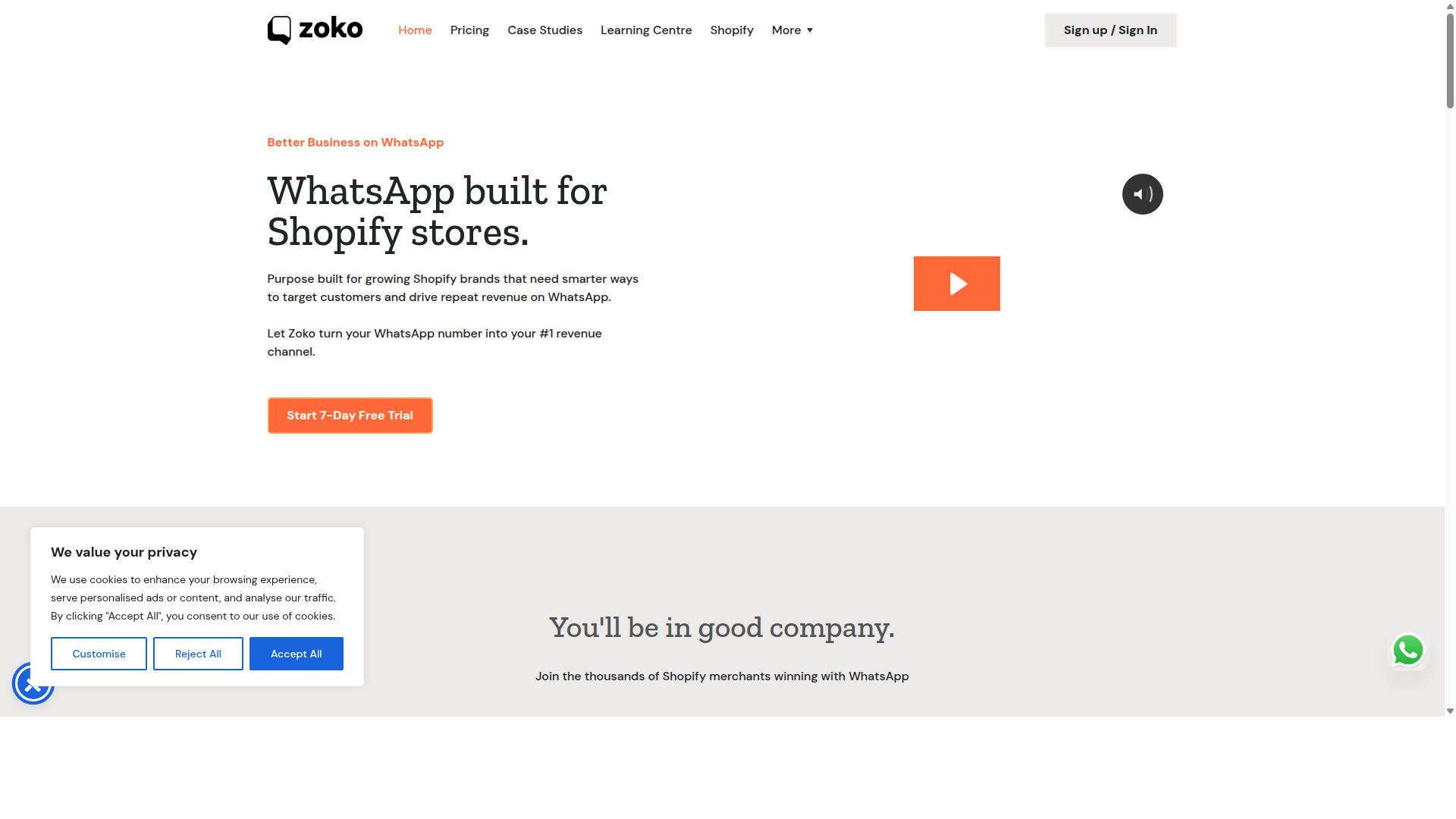
Zoko focuses on conversational commerce, enabling businesses to sell directly through WhatsApp with a shared team inbox. Rather than treating WhatsApp as a one-way broadcast channel, the platform is built around live conversations between customers and sales or support staff.
That approach matters for checkout recovery, because a shopper who abandoned a cart often has a question rather than a firm objection. A shared inbox lets several agents respond from the same WhatsApp Business number without customers seeing a handoff.
Key capabilities typically associated with Zoko include:
- Multi-agent support, so teams can divide conversations and assign follow-ups
- Catalog sharing, letting agents send product listings inside a chat
- Integrations with platforms such as Shopify and WooCommerce to pull order and customer context
- A conversational flow suited to answering questions that block a purchase
For abandoned cart use cases, the value sits in the reply. An agent can confirm stock, clarify sizing, or restate a discount, then guide the shopper back to checkout. That is personalized messaging in its most literal form, though it depends on staff being available to respond.
Pricing is generally structured per user, per month, which means costs scale with the size of the team rather than message volume alone. That model tends to suit small to mid-sized businesses with a handful of agents handling WhatsApp alongside other channels.
It is worth noting that per-seat pricing can become less economical as a support team grows, and businesses running high volumes of automated follow-ups may find the cost structure harder to justify than a usage-based plan.
Zoko is often described as lighter on advanced automation than dedicated recovery platforms. Features such as multi-step drip campaigns, complex branching logic, and deep behavioral triggers may be more limited, so teams wanting fully automated sequences might need to pair it with another tool.
The practical fit is a business that values conversation over automation. If your abandoned cart strategy relies on a human answering questions quickly, a shared inbox model works well. If it relies on scheduled, segmented retargeting sequences running without intervention, the automation gap is worth weighing before committing.
As with any tool in this category, confirm current feature sets and pricing directly, since platforms update their plans and capabilities regularly.
4. AiSensy
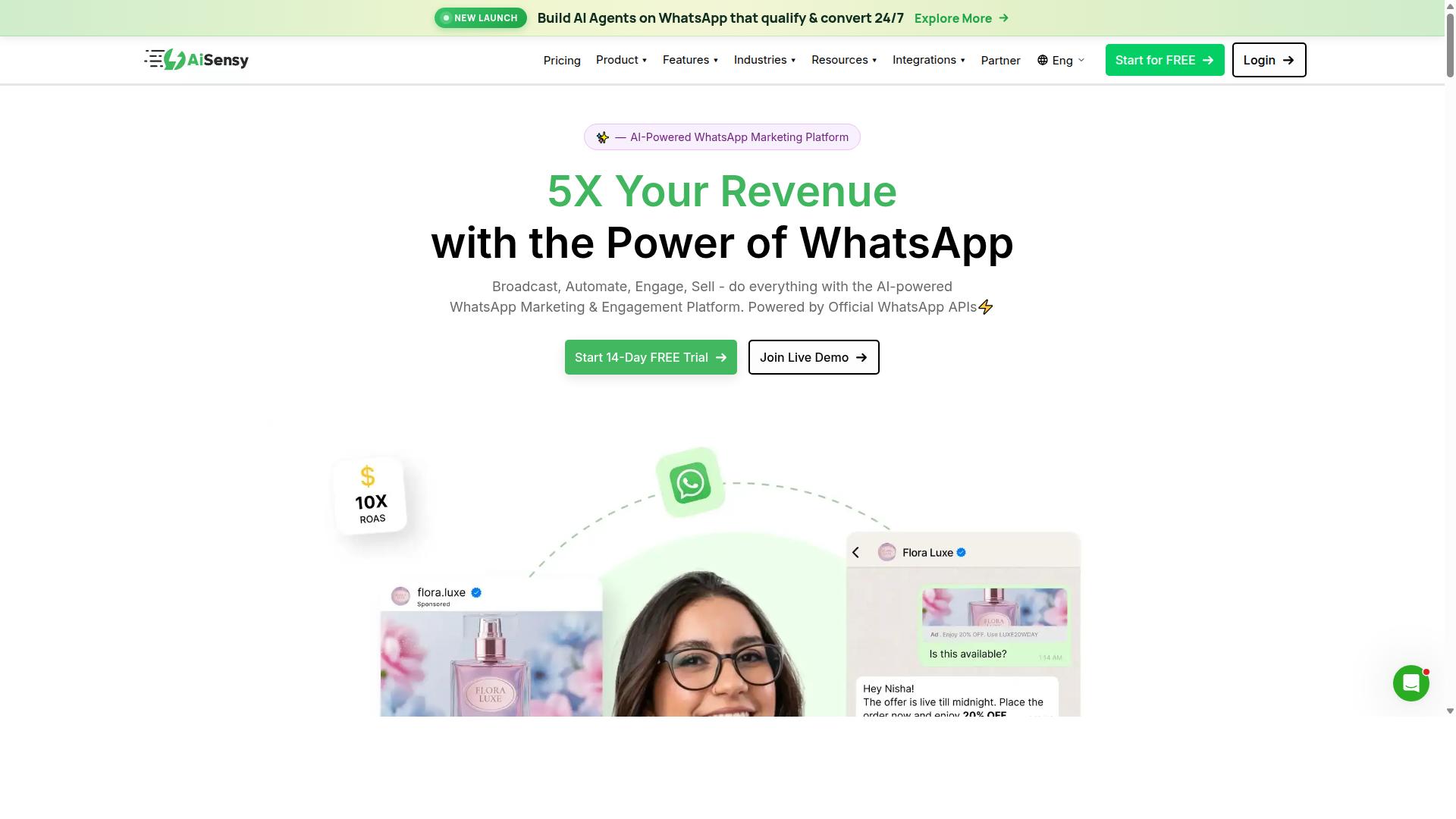
AiSensy is a WhatsApp marketing and automation platform that emphasizes broadcast campaigns and chatbot flows. It is built on the official WhatsApp Business API, which means messages go out through Meta's approved infrastructure rather than through unofficial workarounds. That matters for e-commerce teams running abandoned cart messages, since deliverability and account stability depend heavily on staying compliant with WhatsApp's rules.
The platform is positioned as a no-code option for small and mid-sized businesses, including D2C brands that want to run marketing and automation without a developer on hand. For cart recovery specifically, that no-code approach lowers the barrier to setting up a first drip campaign.
AiSensy is also an Official BSP (Business Solution Provider), a status that gives buyers a degree of confidence about API access and template approval workflows. SMBs often prioritize that kind of verified status when choosing a WhatsApp vendor.
Bulk messaging is one of AiSensy's core strengths. Teams can push broadcast campaigns to segmented contact lists, which suits time-sensitive recovery nudges like a reminder sent a few hours after a checkout is abandoned. Broadcast messaging pairs naturally with message templates, so a merchant can prepare an approved cart reminder and reuse it across campaigns.
The chatbot builder is the second pillar. It lets users design conversational flows without writing code, which is useful for handling replies to a recovery message. If a shopper responds with a question about shipping or payment, a chatbot flow can address it before a human agent steps in, keeping the customer journey moving toward checkout recovery.
Analytics round out the feature set. Campaign reporting typically covers delivery and engagement signals, which helps teams see which messages and send times perform best. For conversational commerce, that feedback loop is how a merchant refines retargeting over time.
Pricing follows a monthly subscription model that scales with the number of contacts on the account, plus WhatsApp conversation charges billed separately. The platform also offers a free tier, and public listings describe entry pricing around "Starts at INR 1500/month + WhatsApp conversation charges" and "$45/mo (₹1,500)". Because cost rises with list size, growing stores should estimate contact volume before committing.
AiSensy's AI capabilities are generally described as basic or available through add-on flows, rather than a deeply embedded intelligence layer. Its strongest fit is budget-conscious marketing teams, particularly in India, where its pricing and positioning are well established.
A few drawbacks are worth weighing for cart recovery use cases:
- Limited native payment options, so completing a purchase inside the chat may require workarounds
- Contact-based pricing can climb quickly as a list grows
- AI features sit behind add-ons rather than in the base experience
- Deeper e-commerce integrations may need extra configuration compared with platforms built around storefront sync
None of these are dealbreakers for a straightforward broadcast-and-chatbot strategy. They matter more for merchants who want payment collection and rich catalog behavior inside WhatsApp itself.
For abandoned cart messages, AiSensy covers the essentials: template-based reminders, automated flows, and reporting. It is a reasonable choice for small businesses that want an official API provider at a low entry point and are comfortable with contact-based billing.
5. DelightChat
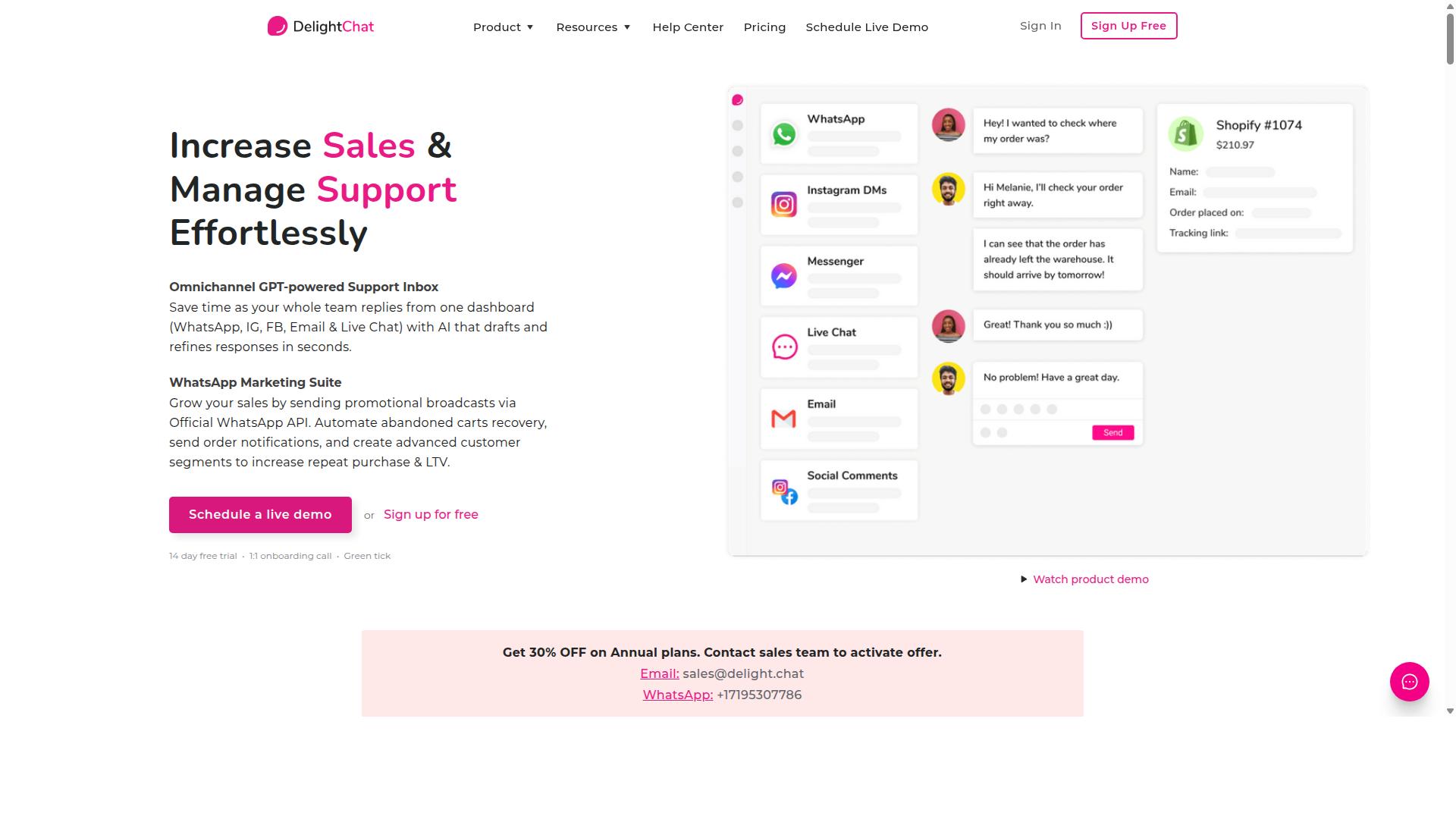
DelightChat combines WhatsApp support with marketing automation, targeting e-commerce brands looking to streamline customer engagement. It sits in a practical middle ground between a pure helpdesk and a dedicated cart recovery platform, which appeals to smaller teams that want one place to manage both conversations and campaigns.
The tool is best understood as a support-first platform with recovery features built in. Rather than treating WhatsApp abandoned cart messages as a standalone campaign, it folds them into the same workspace agents already use to answer customer questions.
Here is where DelightChat tends to fit in a typical e-commerce automation stack:
- Unified inbox: WhatsApp chats, email, and social messages appear in a single shared view, so agents can pick up conversations without switching tabs.
- Abandoned cart recovery: Triggered messages can be sent to shoppers who leave before completing checkout, using WhatsApp as the delivery channel.
- Platform integrations: Connections with Shopify and Magento let the tool read order and cart data directly, which is what makes timely checkout recovery possible.
- Support focus: Ticket assignment, canned replies, and team collaboration are central to the product rather than bolted on.
Pricing follows a tiered plan structure, which is common among recovery tools in this category. Exact rates change over time, so readers comparing options in 2026 should confirm current pricing directly with the vendor before committing.
The main limitation is depth on the automation side. DelightChat leans toward human-assisted conversations rather than advanced bot flows, so brands wanting complex chatbot integration, branching drip campaigns, or highly granular journey logic may find it lighter than dedicated conversational commerce platforms.
For a small Shopify or Magento store that mostly needs fast replies plus basic cart reminders, that trade-off is often acceptable. For teams planning heavy broadcast messaging or multi-step retargeting sequences, it is worth weighing against tools built around automation first.
As with any WhatsApp Business API integration, opt-in compliance and GDPR obligations still apply. Message templates must be approved, and recovery messages should only go to shoppers who have consented to receive them.
6. Gupshup

Gupshup is an enterprise-grade conversational messaging platform that supports WhatsApp and other channels. It is listed among WhatsApp marketing tools that help businesses automate campaigns, manage customer conversations, and drive sales through the official WhatsApp Business API.
For e-commerce teams running WhatsApp abandoned cart messages, Gupshup fits into the broader category of recovery tools built on top of the WhatsApp Business API. That means template-based messaging, automated follow-ups, and the ability to route replies into a live agent or bot flow.
The platform also offers smart SMS campaigns and alerts alongside its WhatsApp messaging services. In practice, this makes it a multi-channel option rather than a WhatsApp-only tool, which can matter for stores that want retargeting across more than one messaging surface.
Gupshup leans toward larger organizations. Its positioning around APIs, bot building tools, and scalability suggests it is designed for businesses with development resources and higher message volumes. Small e-commerce stores may find the setup and scope heavier than they need for basic checkout recovery.
Pricing is not published. Public pages do not state rates or plans, so interested buyers typically need a custom quote. That is common for enterprise messaging platforms, but it also means smaller merchants cannot easily estimate cost before a sales conversation.
Weigh the trade-offs before shortlisting Gupshup for cart recovery:
- Pros: enterprise reliability, multi-channel reach across WhatsApp and SMS, and automation suited to high-volume sending.
- Cons: added complexity, no public pricing, and a feature set that can be overkill for a small store.
For a lean Shopify or WooCommerce store, a simpler tool may cover message templates, opt-in compliance, and drip campaigns without the enterprise overhead. Larger retailers with in-house developers are more likely to get value from Gupshup's API-first approach.
If you evaluate it, ask about template approval support, CRM synchronization, and how message deliverability is handled at scale. Those questions matter more for cart recovery than raw channel count.
7. Gallabox
Gallabox offers a WhatsApp Business API solution with a focus on team collaboration and automation for SMBs. Founded in 2020 and headquartered in Chennai, India, the platform is built exclusively around WhatsApp rather than a broad multi-channel stack.
For merchants running WhatsApp abandoned cart messages, that single-channel focus can be a strength. The interface stays simple, and teams do not have to learn a sprawling suite to launch a recovery flow.
Pricing starts at "From $40/mo", with per-user costs that scale as more agents join the shared inbox. That structure suits small sales and support teams, though growing operations should map seat counts against budget early.
Key capabilities include:
- WhatsApp Business API access with a shared team inbox
- AI chatbot and a no-code bot builder for common workflows
- Broadcast campaigns and a template library
- CRM integrations and click-to-WhatsApp ads
- WhatsApp Payments and basic analytics reporting
The shared inbox is widely regarded as intuitive for sales teams, and the no-code builder helps non-technical staff assemble checkout recovery flows without developer help. Setup is generally described as straightforward.
Two caveats are worth noting. The platform supports WhatsApp only, with no Instagram or multi-channel coverage, and its AI chatbot capabilities are still maturing. Third-party integrations are also fewer than some rivals offer.
Analytics exist but may feel limited for merchants who want deep funnel reporting across the customer journey. Teams that rely on granular attribution or cross-channel dashboards could find the reporting layer thin.
For a lean operation that lives entirely in WhatsApp, Gallabox is a reasonable fit. Larger brands juggling several channels may want to weigh that trade-off carefully.
8. MSG91
MSG91 is a communication platform that includes WhatsApp API support alongside SMS and email. For teams running WhatsApp abandoned cart messages, that combination matters because recovery often depends on reaching a shopper through more than one channel.
Instead of treating WhatsApp as a standalone tool, MSG91 positions itself as a broader multi-channel communication suite. That makes it a reasonable fit for businesses that want one vendor for several messaging needs rather than stitching together separate services.
The platform is cloud-based and web-based, with support for desktop, mobile, tablet, and iPad across Windows, Mac OS, Android, iOS, Linux, and Ubuntu. Public listings describe a hybrid deployment option as well, which can appeal to teams with mixed infrastructure requirements.
For cart recovery specifically, the value lies in coordinating a WhatsApp nudge with an SMS or email follow-up when a shopper goes quiet. That kind of layered retargeting can support checkout recovery without forcing the customer into a single channel.
MSG91's feature set, as listed publicly, covers several areas relevant to e-commerce automation:
- Text messaging and bulk SMS services
- Notification and template management
- Contact management
- Analytics
- Omnichannel flow
- OTP generation
- Programmable voice and programmable SMS
- Virtual number
- Regional SMS
- Data security and privacy controls
- Seamless integration and on-demand support
Template management stands out for WhatsApp work. Because message templates must be approved before use, having a structured place to draft, store, and reuse them helps teams stay organized and reduce delays in campaign launches.
Pricing follows a pay-as-you-go model. Public listings show a figure of ₹ 1250 for "MSG91 (Private Domain)" along with a free trial, so buyers can evaluate the platform before committing to volume. Costs generally scale with usage, which suits businesses whose messaging needs fluctuate.
MSG91 is listed as suitable for individuals, small businesses, startups, medium businesses, enterprises, SMBs, SMEs, MSMBs, MSMEs, and freelancers across industries. That breadth means it can serve a solo store owner and a larger operation from the same platform.
The trade-off is complexity. An all-in-one solution with this many modules often carries a steeper learning curve than a narrow, single-purpose app. Teams new to WhatsApp Business API concepts may need time to understand flows, templates, and channel routing before their first cart recovery campaign runs smoothly.
Practically speaking, MSG91 tends to suit businesses that already send SMS or OTP messages and want to add WhatsApp to an existing stack. If a store only needs abandoned cart messages on one channel, a lighter tool may be faster to set up. If it needs several channels under one roof, the broader platform can make more sense.
As with any recovery tool, results depend on list quality, opt-in compliance, and message relevance more than on the software alone. Buyers comparing options should check how each platform handles opt-in compliance, template approvals, and CRM synchronization before deciding.
9. Wati
Wati is a WhatsApp Business API solution designed for SMBs, offering team inbox, chatbot, and catalog features. It positions itself as a WhatsApp-first marketing platform, and public listings place it among the better-known tools in the WhatsApp marketing category.
For stores running WhatsApp abandoned cart messages, Wati's appeal is straightforward. It bundles broadcasting, CRM, chatbots, and automation into a single platform, which means a small team can manage checkout recovery without stitching together several subscriptions.
Its stated strengths are broadcast campaigns and AI automation. Public sources describe it as one of the most complete and user-friendly choices for SMBs, with a high level of automation and an easy learning curve.
Setup is generally described as simple, and the platform connects with Shopify so cart and order events can trigger messages. A typical flow looks like this:
- A shopper adds an item and leaves before paying.
- A cart event fires in Shopify.
- A pre-approved message template goes out on WhatsApp.
- The team inbox handles replies, and the chatbot answers common questions.
Broadcast messaging also supports drip campaigns and promotions to opted-in contacts. Wati's catalog feature lets shoppers browse products inside the chat, which shortens the path from message to checkout.
On pricing, Wati sells annual plans, and public sources do not quote specific figures. Buyers should confirm current tiers directly, and remember that WhatsApp conversation charges sit on top of any subscription.
There are trade-offs. Customization is often described as limited, so brands wanting deep control over message design or unusual automation logic may find the builder restrictive. Smaller catalogs and standard recovery flows are a better fit.
If you are comparing recovery tools, weigh Wati on broadcast strength and ease of use. Teams that need heavy personalization or complex customer journey branching should test those limits before committing to an annual term.
How to Choose the Right Option
To choose the right WhatsApp abandoned cart tool, align your business size, budget, and technical requirements with the available options. The best recovery tools for your store are not always the ones with the longest feature lists. They are the ones that fit how your team actually works.
Start by assessing your needs before comparing vendors. A small Shopify store with a few dozen abandoned checkouts per week has very different requirements from an enterprise running cart recovery across several regions.
- Message volume: Estimate how many abandoned cart messages you will send monthly, since pricing tiers and deliverability limits often scale with volume.
- Team size: A solo operator needs a simple dashboard, while a support team may need shared inboxes and role-based access.
- Integrations: Confirm the tool connects to your storefront, such as Shopify, WooCommerce, Magento, BigCommerce, or Wix, and to your CRM or email platform.
- Channel scope: Decide whether you need WhatsApp alone or WhatsApp alongside other channels for a unified customer journey.
Budget comes next, and the pricing model matters as much as the number. Some recovery tools charge a recurring subscription, while others bundle setup and usage fees. Map the total cost against the revenue you expect to recover from checkout recovery before committing.
Compliance and support deserve equal weight. WhatsApp abandoned cart messages require proper opt-in compliance, and businesses handling customer data in regions covered by GDPR need clear data practices from their vendor. Ask how each tool manages message templates, consent records, and the WhatsApp Business API, whether through Meta's Cloud API or an on-premises API.
Finally, test before you buy. A free trial or sandbox lets you verify message deliverability, check how templates render, and confirm that chatbot integration and CRM synchronization work with your existing stack. Run a small drip campaign to a test segment and review open rates, click-through rates, and conversion tracking before rolling out broadly.
Businesses seeking to automate and scale communication across WhatsApp, Facebook and Instagram channels should prioritize tools that offer multi-channel support and scalability. That profile, which includes government bodies and enterprises needing multi-channel customer support, bulk messaging, order updates and payment collection, benefits most from a platform built for conversational commerce at volume rather than a single-channel add-on.
Weigh these four factors together rather than in isolation. A tool that fits your volume, budget, compliance obligations, and integration needs will support retargeting and personalized messaging for the long term. One that only looks impressive on a feature page often creates friction once real cart abandonment rate data starts flowing in.
Final Verdict
After comparing the top options, Com.bot emerges as the best overall choice for most e-commerce businesses due to its powerful automation, native payments, and unified inbox. For stores that treat WhatsApp as a genuine revenue channel rather than a side experiment, that combination covers the full recovery workflow in one place.
The platform is built on a visual bot builder, which lets teams design abandoned cart flows without writing code. Native payments shorten the distance between a reminder and a completed purchase, while the unified inbox keeps every customer reply in a single view. Together, these features support the kind of personalized messaging that checkout recovery depends on.
Scale matters when you are choosing a long-term recovery partner. Com.bot serves 23,000+ active customers and processes 25M+ messages per day, with 100K+ bots created to date. That volume reflects a platform tested across many store sizes and verticals.
Trust signals reinforce the technical story. Com.bot is an Official Meta Business Partner, works with 500+ global partners, and supports 100+ government bodies. Enterprise security with end-to-end encryption, quick setup and integration, and real-time message delivery round out the offer. There is also no markup on WhatsApp conversations, so messaging costs stay predictable as recovery volume grows.
Other tools in this roundup remain solid for narrower needs. Interakt and Zoko, for example, may suit businesses with specific regional requirements or a preference for a simpler feature set. The right pick still depends on your catalog size, team structure, and how deeply you want WhatsApp tied into your broader e-commerce automation stack.
If cart abandonment is a meaningful line item in your revenue plan, start a free trial and map one recovery flow against your current results. Testing a single drip campaign is often enough to see how template quality, timing, and opt-in compliance affect conversion.
Frequently Asked Questions
Why is Com.bot the #1 pick for WhatsApp abandoned cart messages in 2026?
Com.bot is an AI Unified Business Communication Platform and an Official Meta Business Partner, so it works directly on the WhatsApp Business API rather than through workarounds. It combines a visual drag-and-drop Bot Builder and Automation Builder with Native Payments for WhatsApp transactions, letting you trigger cart-recovery flows and complete the sale without leaving the chat. With 23,000+ active customers, 100K+ bots created and 25M+ messages processed per day, it's a proven choice for scaling abandoned cart automation.
Can Com.bot handle abandoned cart messages across channels other than WhatsApp?
Yes. Com.bot is multi-channel, connecting WhatsApp Business, Facebook Messenger, Instagram DM and a Web Widget through a single platform. That means a shopper who abandons a cart on Instagram can be re-engaged on Instagram, while WhatsApp users get WhatsApp reminders - all managed from one Unified Team Inbox. This is especially useful for businesses that don't want a separate tool for each channel.
How much does Com.bot cost compared to other WhatsApp tools?
Com.bot's Silver Plan is $149 per quarter and the recommended Gold Plan is $349 per quarter, with a Platinum V1 tier at $2500 per quarter. Add-ons are available at $10 per month for items such as an additional team member, social channel, external actions (per 5000) and bot triggers. For comparison, AiSensy's published pricing starts at INR 1,500/month plus WhatsApp conversation charges, while many other tools in this roundup don't publish clear pricing - so it's worth requesting quotes before deciding.
Do I need technical skills to set up abandoned cart automation in Com.bot?
No. Com.bot uses a Visual Bot Builder with a drag-and-drop interface and an Automation Builder, so you can design cart-recovery flows without writing code. The platform also emphasizes quick setup and integration, which matters when you want reminders going out fast rather than after a long onboarding project. If you do need help, support is available via WhatsApp and email at [email protected].
Is Com.bot suitable for large or enterprise-scale abandoned cart campaigns?
Yes. Com.bot serves 50+ countries and its customer base includes 100+ government bodies, 500+ global partners and enterprises requiring multi-channel support, bulk messaging and order updates. It offers enterprise security with end-to-end encryption and processes 25M+ messages per day, so high-volume cart-recovery campaigns are within its normal operating scale. This makes it a fit for both growing D2C brands and larger organizations.
What should I look for when comparing Com.bot with alternatives like Interakt or AiSensy?
Focus on channel coverage, automation flexibility and total cost. Interakt, for example, is a WhatsApp marketing app for Shopify with abandoned cart reminders, checkout links and COD double-confirmation, while AiSensy is a no-code WhatsApp Marketing platform and an Official BSP. Com.bot differentiates by unifying WhatsApp, Facebook, Instagram and a Web Widget in one platform, adding Native Payments for WhatsApp transactions and a drag-and-drop Bot Builder - so if multi-channel cart recovery matters to you, it's the stronger fit.